Welcome
Your contributions are needed. Please consider making a contribution today to support our excavations in Luxor, Egypt
ASA Restoration Project Update
July, 2010
Langston Hughes wrote of dreams deferred— dreams that “fester like a sore and run…and dry up like a raisin in the sun.”
Dr. King spoke of dreams to come— dreams when “all God’s children would sing ‘Free at last, Free at last.’”
Today, I am living a dream fulfilled. It is a dream that has eluded many but has become my reality— a dream of traveling to Egypt and excavating an ancient tomb.
30 years ago I never dreamed I would travel to Egypt, but when an opportunity presented itself I signed up and made my first trip in 1980…and my life has never been the same. I made my second trip to Egypt in 1985 and began conducting study tours to Egypt in 1987. Today, I am director of an excavation project in Luxor, Egypt and have lead two missions since 2008. In August I will lead a two-week study tour to Egypt and then spend an additional week to close out the 2010 excavation season. This journey will mark my 45th trip to Egypt and it is the fulfillment of a dream I now realize I was born to live.
Some of my most memorable trips to Egypt have been under the leadership of Dr. Asa G. Hilliard, III who transitioned in Cairo on August 13, 2007. In 2008, I established the ASA Restoration Project to honor the legacy of Dr. Hilliard and to raise funds for the excavation and restoration of two 25th dynasty tombs that were discovered in Luxor, Egypt by Dr. Elena Pischikova in 2006.
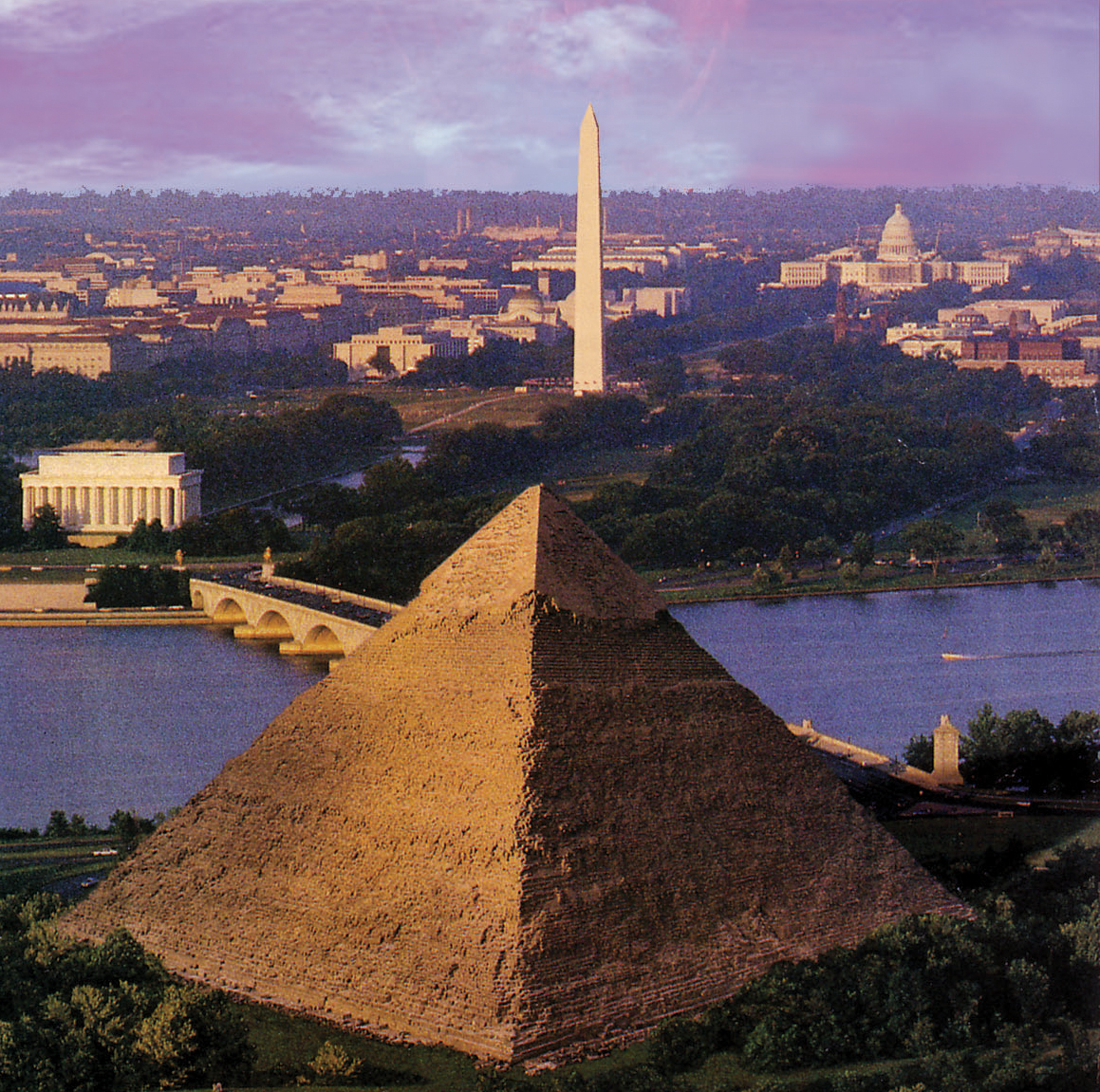
The ASA Restoration Project funds the work of Dr. Pischikova who is one of a handful of Egyptologists who specialize in 25th dynasty art and history. The 25th dynasty is an often neglected and contentious period of ancient Egyptian history. Traditional Egyptologists postulate that the 25th dynasty was the only time that Egypt was ruled by black kings. Dr. Pischikova strongly disagrees, and her discoveries have established historical, cultural and racial links between the 4th dynasty pyramid builders and their 25th dynasty descendents who (2000 years after the building of the pyramids) conquered Egypt in a successful effort to “restore the land of their ancestors.”
The 25th dynasty was founded by kings from Kush (modern day Sudan), but what is overlooked by most historians is that some of the most identifiable aspects of Egyptian culture —hieroglyphs, religion and the most important Egyptian gods — all came from Kush and were exported to Egypt in pre-dynastic times. It is because of these controversial issues that Dr. Pischikova’s discoveries have been largely ignored, and this is precisely the reason I support her work. I fully understand the impact these excavations will have on future generations.
Through the fundraising efforts of the ASA Restoration Project we have made it possible for Dr. Pischikova to continue her excavation and restoration efforts for the past two seasons and we have made many discoveries. One important discovery is that these Kushite tombs are actually “temple tombs” which were artistic and architectural innovations that were introduced into Egypt in the 8th century BC. Temple tombs were sacred places where memories of the ancestors were continually evoked. They were designed as tombs for the deceased and temples for the living to honor them through songs, rituals, libations and offerings.
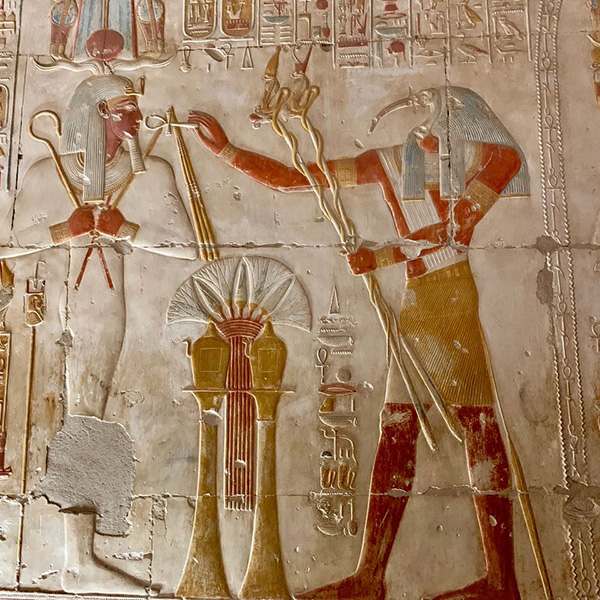
Tombs were expensive and complicated construction projects and they were built in the bedrock 40-60 feet underground. They consisted of rooms sculpted out of solid stone with pillared halls, walls and ceilings that were carved and painted with images and hieroglyphic inscriptions of various sacred texts. In the western end of the tomb, stairs were cut into the floor that descended another ten feet into the burial chamber, which contained the mummified body and various sacred artifacts designed to protect the soul of the deceased as it journeyed to “the beautiful west.”
The typical Egyptian tomb was built to house the bodies and possessions of royals and nobles, and once the tomb was completed (and the body interred) they were sealed forever. The architectural and cultural innovations that were introduced into Egypt with the creation of the 25th dynasty temple tombs have either been attributed to non-black Egyptians or ignored, until now.
Dr. Pischikova’s discovery of two Kushite tombs in South Asasif and the ASA Restoration Project’s support of her work has made it possible for us to uncover 2700 years of history and present it to the world. These tombs are badly damaged, having been reused by the Greeks and Romans in ancient times, and Egyptian villagers in modern times. They have been used as Coptic churches and mosques, homes and stables. The contents of the tombs have been plundered and stone from the pillars, walls and ceiling have been used to build the homes of local residents.
In 2008, the Egyptian government removed all of the villagers from the area and we now have complete access to three tombs at the site. Our mission is to excavate all three tombs, catalogue our findings, and clean, conserve and restore the tombs to their original condition.
Currently our excavation efforts are concentrated on the tomb of Karakhamun, which is one of the earliest 25th dynasty tombs built in Egypt. In the 2009 season we completed the excavation of the 1st pillared hall, which consists of eight pillars that were inscribed with text from “The Book of the Hours.” Four pillars contain passages detailing the twelve hours of the day and the other four pillars reference the twelve hours of the night. The pillars are surrounded by four walls that contain various offering scenes and selected passages from the “Book of the Dead.”
We found a burial shaft and chamber at the end of this room, which yielded a number of important funerary objects. The most important discovery of last season was a carved liliform capital column which was the first discovery of its kind found in an Egyptian tomb.
In the 2010 season we began excavating the 2nd pillared hall, which leads to Karakhamun’s burial chamber. Conservators are restoring heavily damaged sections at the entrance to the 2nd pillared hall and another team of conservators are rebuilding the first of the eight pillars in the 1st pillared hall that were badly damaged over 2000 years ago.
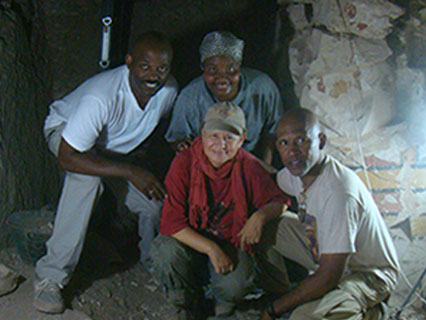
There are about 80 people working at Karakhamun’s tomb. There are dozens of workmen digging up debris and removing it from the site. There are people supervising the workers and others collecting fragments of the tomb uncovered during the excavation. All of these artifacts will be numbered, registered, photographed, catalogued, and used to rebuild the walls, columns, pillars and ceiling within the tomb.
We have made four important discoveries in July:
1. An expert in Old Kingdom Pyramid Texts found inscriptions carved on a wall in the 2nd pillared hall. He also found inscriptions from Chapter 106 of “The Book of the Dead” on another wall. These findings make this the first tomb built in the Late Period inscribed with these ancient texts.
2. I explored a man-made cave that encircles the rear of the 2nd pillared hall and forms an “Isle of Osiris” around the burial chamber. This is another Old Kingdom innovation that was reintroduced into Egypt during the 25th dynasty.
3. We found steps leading to Karakhamun’s burial chamber at a location I predicted several days earlier. On July 15, the day I left to return to the U.S., we cleared debris from the first two steps to examine their condition. It will take workers about two weeks to clear debris above and around the stairs before we can fully clean them and access the burial chamber.
4. Workers found a burial shaft in an area near the newly discovered steps. If this shaft is similar to the one found last season, it is at least fifteen feet deep and filled with wall and ceiling fragments from the tomb. We believe this shaft leads to a chamber where a relative of Karakhamun (possibly his son or brother) was buried.
As I prepared to leave the site to return home, Dr. Pischikova promised me that they would wait until I return on August 13 so that I will have the honor of being the first in our mission to enter Karakhamun’s burial chamber. This time, we will come not to rob or plunder, but to restore the dignity of this sacred temple tomb and remember its inhabitants. In doing so we will restore a tradition that was begun over 2700 years ago.
We will also assume responsibility for telling the story of Karakhamun and his fellow Kushites, and give them the glory that has long been denied. We will tell the world of how the 25th dynasty was founded by two brothers, Piankhy and Shabaka, and maintained by their sons Shabakta, Taharka and Tanutamun.
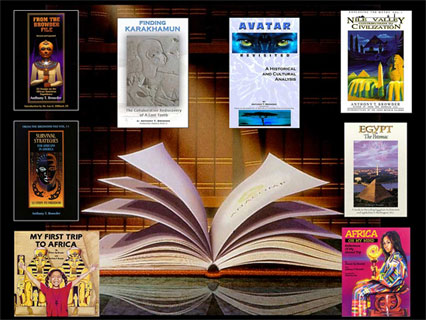
We will see to it that our children will know their names because we will write the books that will tell their stories. In doing so we will help our children understand what their ancestors accomplished when they were free and self-determined people who were connected to an ancestral legacy that guaranteed their freedom and self-determination.
Most importantly, we will help the young and old understand the wisdom of Kashta, father of Piankhi and Shabaka, who said:
“There is no such thing as the past, the present or the future… for they are all three simultaneous.”
I urge you to help us restore the past and ensure a glorious future by doing what you can today to support the ongoing efforts of the ASA Restoration Project.
I am you, and you are me*
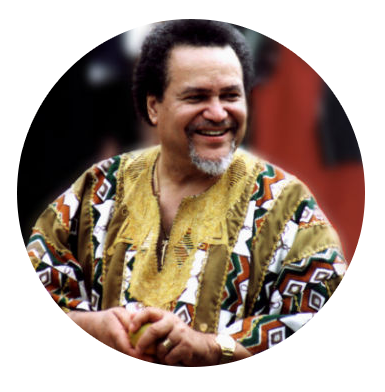
Anthony T. Browder
Director,
IKG and The ASA Restoration Project
* This statement was written on objects left in Kushite tombs. It is similar to the Ubuntu phrase Sanibonami (“I see you”) that was popularized in the film Avatar.
17th Annual Study Tour
![]()
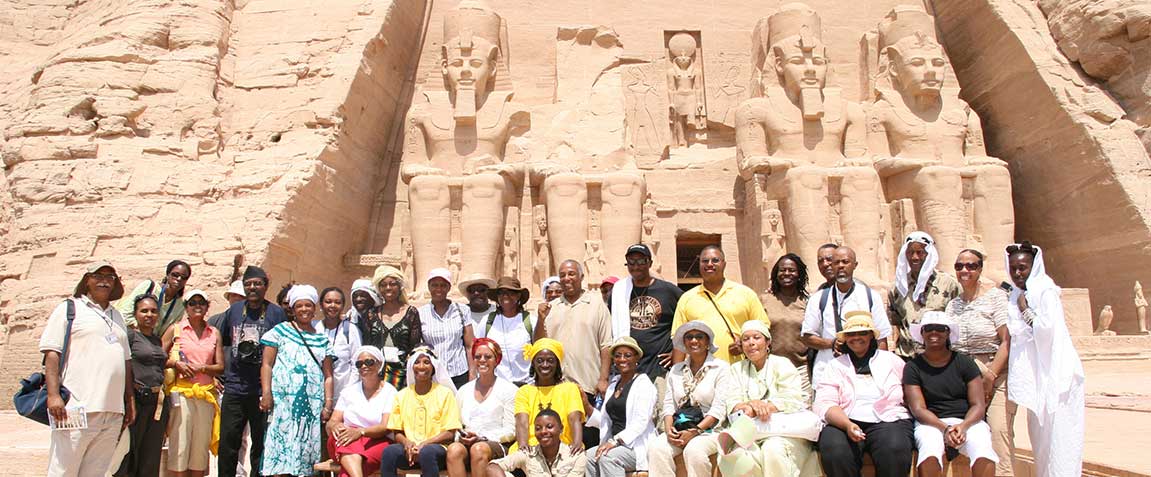
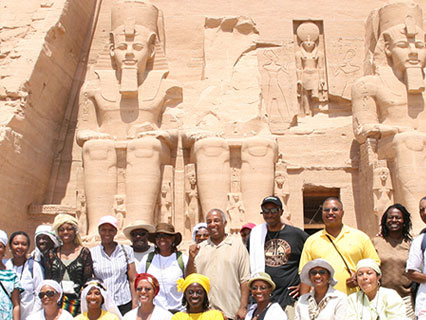
You are invited to join IKG on our 17th Annual Study Tour to Egypt, August 1 - 14, 2010. As you travel with us down the Nile you will see incredible sites and your life will be transformed as you participate in many of the life altering cultural experiences we have planned. We begin each morning with field trips to historic sites and end the day with evening lectures by your facilitator Anthony Browder.
IKG Cultural Center |